

Toddler Businesses: Navigating Early Self-Sufficiency Without Losing Balance
February 5, 2026 • 7 mins read
Quick Answer
A Toddler business is self-supporting, but not shock-proof.
If your revenue is real but your stability depends on your constant involvement, you’re likely in the Toddler stage.
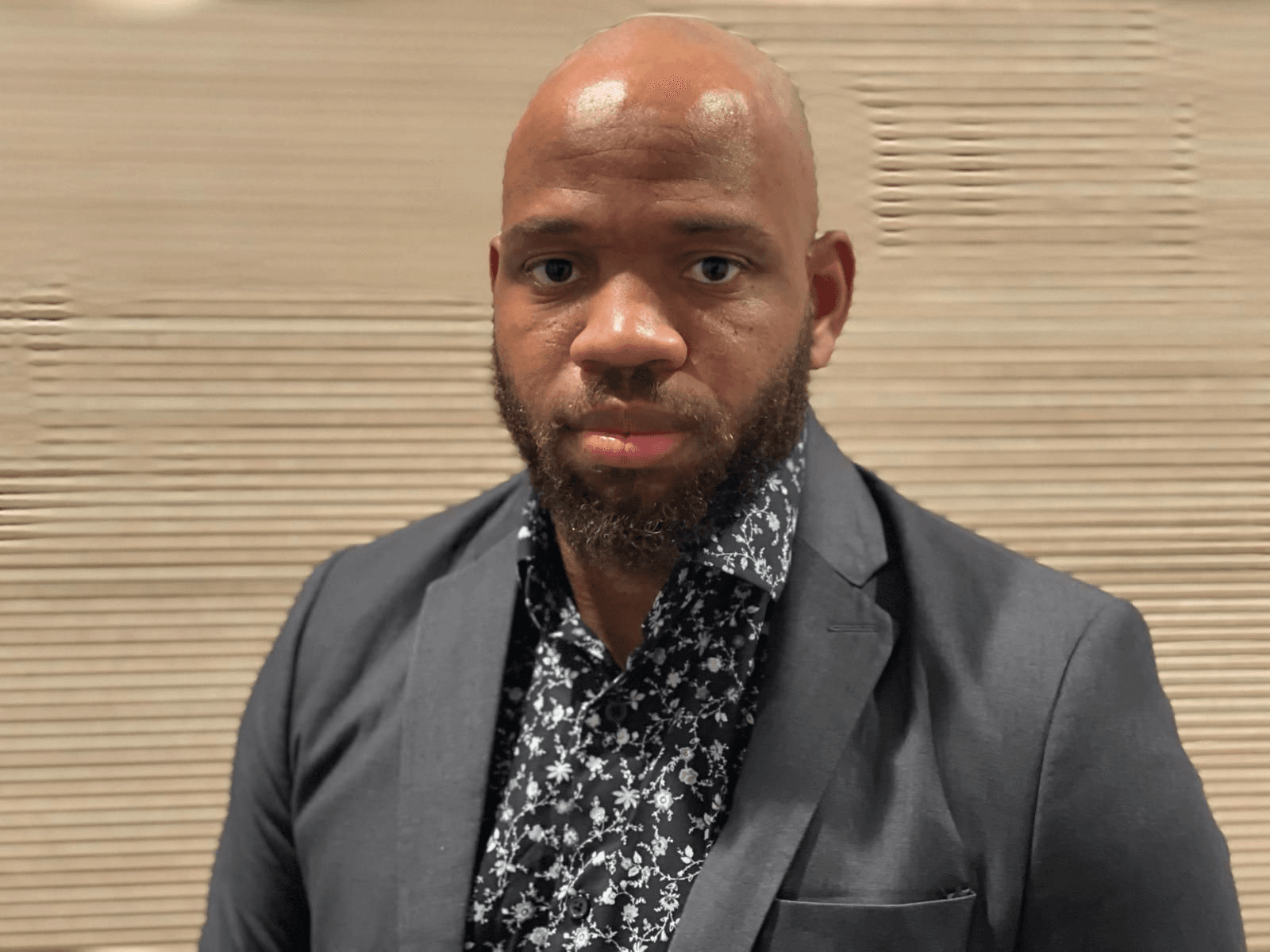
By Chukwudum “Chumze” Chukwudebelu
Founder/CEO, TheChumEffect Creator of the BAAB Framework

Orientation: What a Toddler Business Is
A Toddler business is a business that has moved beyond pure survival but has not yet achieved durability. It is no longer dependent on constant external life support, yet it remains fragile in ways that are often underestimated.
This page is for founders and operators who sense that their business is “working,” but still feels unstable, exhausting, or overly dependent on their personal involvement. It is also for those who feel pressure to scale, hire, or professionalize, but are unsure whether the business is actually ready.
The purpose of this article is not to offer growth strategies or operational tactics. Instead, it explains what defines the Toddler stage within the Business as a Baby (BAAB) framework, why this stage is uniquely dangerous, and how misinterpreting it often leads to collapse rather than progress.
The Core Reality of a Toddler Business
A business enters the Toddler stage when it becomes functionally self-supporting.
This means two things are true at the same time.
First, the business can consistently cover its own basic operating expenses through revenue generated from actual business activity. Not sporadic wins, not founder injections, and not temporary spikes—but repeatable income that keeps the business running.
Second, the business can support the founder’s basic living and functional needs. This does not mean luxury, scale, or abundance. It means the founder no longer has to rely on an external job or emergency support simply to survive.
Together, these conditions mark a real shift. The business can now stand on its own.
However, standing is not the same as being stable.
At this stage, the business is still highly sensitive to disruption. It has not yet developed buffers, redundancy, or resilience. While it no longer requires constant external support, it still requires close supervision.
From a BAAB perspective, the Toddler stage represents independence without durability.
Why Early Self-Sufficiency Changes Everything
Survival changes psychology.
Once a business can pay its bills and support its founder, confidence increases quickly. Expectations rise. Pressure follows. The business begins to feel closer to “figuring it out” than it actually is.
This is where many founders misinterpret what has happened. The absence of immediate danger is mistaken for stability. Revenue is mistaken for resilience. Momentum is mistaken for readiness.
In reality, coordination often lags behind income. The systems that produce revenue are still narrow, brittle, or over-reliant on the founder. The business can walk, but not reliably.
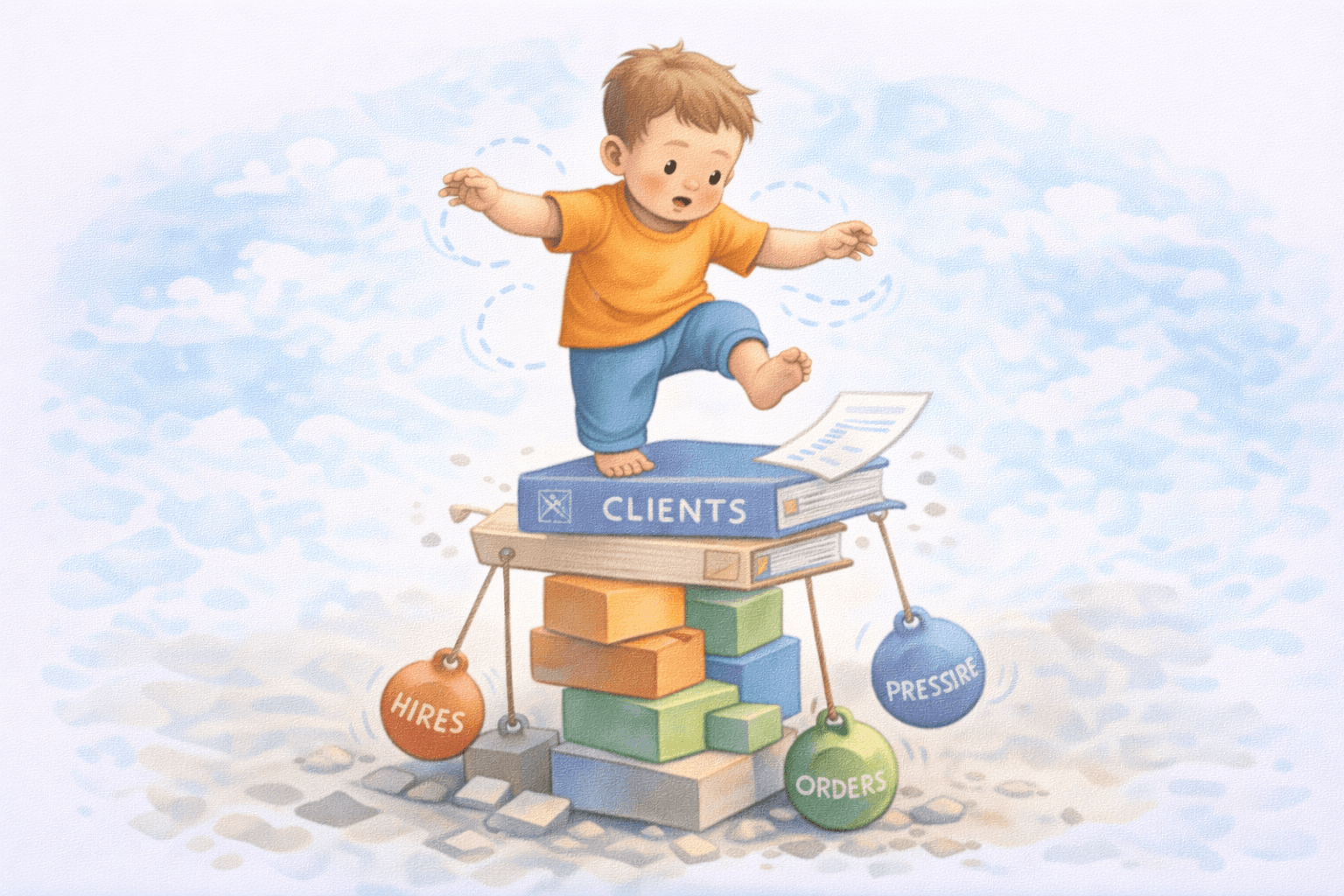
The danger of the Toddler stage lies in this gap between perception and reality. Standing upright creates the illusion that running is next, when in fact balance has not yet been learned.
What a Toddler Business Looks Like in Practice
In practice, a Toddler business exhibits mixed signals.
Some outcomes repeat. Certain customers return. Specific offerings consistently generate revenue. At the same time, inconsistency remains common. Performance varies by channel, by month, or by circumstance.
The founder is still central to decision-making. Even when delegation begins, it is partial and uneven. Responsibility may be shared, but accountability often flows back to one person.
Operational noise increases. More moving parts mean more coordination, more communication, and more opportunities for misalignment. What once felt simple now feels busy.
Emotionally, this stage is often more draining than the Baby stage. There is more at stake, more to lose, and less room for error. The business is no longer just an idea—it is a livelihood.
These patterns are not signs of mismanagement. They are characteristic of a system that has outgrown survival but not yet developed resilience.
What Actually Works at the Toddler Stage (And Why)
What works at the Toddler stage is reinforcement, not expansion.
The focus shifts from discovering whether something can work to strengthening what already does. This does not require heavy systems or aggressive scaling. It requires attention to consistency.
Light coordination begins to matter. Roles become clearer, though not rigid. Responsibility is introduced carefully, without freezing the organization too early.
The goal is not speed. It is balance. Each additional commitment—whether a new hire, process, or offering—adds weight to a system that is still learning how to stay upright.
From a BAAB perspective, restraint at this stage is not conservatism. It is protection. It preserves optionality and reduces the cost of inevitable mistakes.
What Breaks Toddler Businesses
Toddler businesses are most vulnerable when early success is treated as proof of readiness.
Common failure patterns include hiring too quickly, formalizing processes prematurely, expanding offerings before stabilizing one, or mistaking activity for reliability. These decisions are usually driven by pressure, not recklessness.
The most damaging failures at this stage are structural, not tactical. They permanently reduce the business’s ability to recover.
Two failure modes are particularly common.
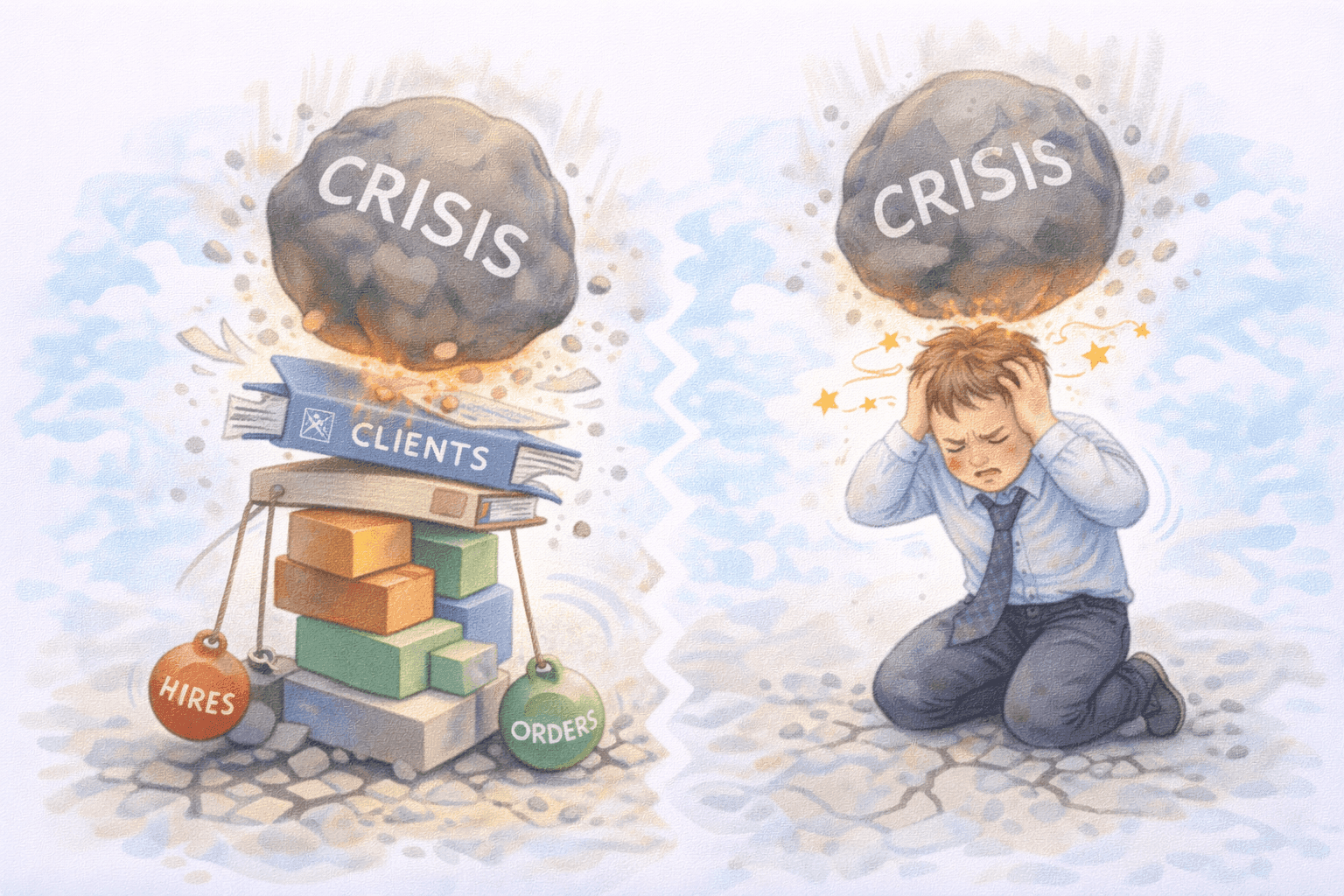
Split illustration showing a Toddler-stage business absorbing a crisis on one side, contrasted with a founder personally absorbing the crisis on the other, highlighting the difference between business resilience and founder burnout
The First Hire Problem (The “First Babysitter”)
The first hire in a Toddler business is not a growth hire. It is a caretaking role.
This person touches fragile systems everywhere—operations, customers, and internal decision-making. The wrong hire does not simply underperform; they amplify instability.
A common mistake is assuming that experience in a mature organization automatically translates to early-stage effectiveness. Operating within established systems is different from helping raise something that does not yet have them.
The relevant question is not where someone worked, but whether they have helped stabilize something fragile before. In some cases, that means hiring and training internally. In others, it means fractional or outsourced support. Sometimes, delaying hiring is the least risky choice.
Context determines the right approach. There is no universal answer.
The First Crisis Problem (Lack of Shock Absorption)
The first real crisis of a Toddler business is inevitable.
A major client leaves. Revenue drops suddenly. An operational failure occurs. The shock itself is not unusual. What matters is who absorbs it.
At this stage, most businesses have not been designed to absorb shocks. As a result, the founder absorbs the impact—financially, emotionally, psychologically, and often personally. Because identity is still tightly fused with the business, the crisis becomes internalized.
Early revenue creates a false sense of invincibility. The business appears stronger than it actually is. When the shock hits, there is no buffer.
If the founder absorbs the shock, the business does not learn to.
Recovery requires healing before acceleration. Understanding why the crisis occurred. Redesigning the business so future shocks are absorbed systemically, not personally. Attempting to move faster without healing compounds damage.
An unhealed injury cannot support faster movement.
Hiring for a role like this right now? One call is usually enough for us to tell you whether we can fill it.
Book a CallToddler vs Other Stages (Context & Transitions)
The Toddler stage sits between exploration and growth. It is defined by stabilization, not scale.
Compared to the Baby stage, the Toddler business is self-supporting. Compared to the Teenager stage, it lacks resilience and complexity management.
False signals of transition are common. Temporary revenue spikes, new hires, or increased visibility do not necessarily indicate readiness for the next stage. Real transitions are marked by consistency, shock absorption, and reduced founder centrality.
Skipping this work creates fragility that surfaces later, often when the cost of failure is higher.
How TCE Thinks About Toddler Businesses
At The Chum Effect, Toddler businesses are approached with caution and clarity.
The emphasis is placed on stabilization rather than acceleration. Decisions are evaluated based on whether they reinforce what already works or introduce unnecessary risk.
At this stage, restraint becomes harder—and more important. The temptation to grow quickly is strong, but the cost of misalignment is high. Guidance focuses on helping founders distinguish between momentum and readiness.
This approach does not delay growth. It increases the likelihood that growth, when it comes, is sustainable.
Where Toddler Fits in the BAAB Framework
Within the BAAB framework, the Toddler stage is about balance and resilience. It bridges survival and growth.
To understand where this stage came from, revisit the Baby pillar. To explore what changes as complexity increases, continue to the Teenager stage.
Closing Perspective
Survival does not equal durability. Revenue does not equal resilience.
The Toddler stage is where businesses learn whether they can withstand pressure without breaking. Stability is built deliberately, not declared. Balance precedes speed.
Understanding this stage accurately does not slow progress. It prevents collapse.
Frequently Asked Questions

How do I know if I’m in the Toddler stage?
If the business supports itself and covers basic founder needs, but still feels fragile and founder-dependent, it is likely in the Toddler stage.
Should I hire my first employee now?
Hiring can help or harm at this stage. The key question is whether the hire stabilizes fragile systems or adds complexity the business cannot yet absorb.
Should I hire someone senior or experienced?
Experience matters only if it matches context. Early-stage caregiving ability is often more relevant than mature-company optimization experience.
Should I outsource or use fractional help instead?
In many cases, fractional support reduces risk by adding capacity without permanent weight. The right choice depends on the business’s tolerance for commitment.
Why does growth still feel exhausting?
Because coordination and resilience lag behind revenue. This is normal at the Toddler stage.
What happens if I lose a major customer?
The first major loss often reveals whether the business can absorb shock or whether the founder is absorbing it instead.
How do I know when I’m ready for the Teenager stage?
When outcomes repeat reliably, shocks are absorbed systemically, and the founder is no longer the primary stabilizer.
Hiring right now? Let's talk.
Book a 20-minute call with The Chum Effect. Bring the role you are struggling to fill and we will tell you honestly whether we can help, including when we are not the right fit.
Related articles
Business as a Baby (BAAB): A Stage-Based Way to Understand How Businesses Actually Grow
Teenager Businesses: Power Without Governance
Staffing: Hiring Without Breaking the Business
AI as a thinking Partner - People Edition
Most clarity problems aren’t confusion—they’re unstructured thinking. This article explains why thoughts stay messy in your head, how understanding forms when reasoning is externalized, and how to use AI as a thinking partner without outsourcing judgment.
The Everyday Thinking Partner Rule
A simple rule for using AI without losing your judgment: let it clarify your thinking, not decide for you. Clearer mind. Same responsibility.
Why Trust Is the Only Real Hiring Asset
Interviews, data, and tools can look perfect on paper. This piece explains why trust is what actually holds hiring systems together.


