


Why Transferable Skills Are Ignored
February 6, 2026 • 3 mins read
Quick Answer
Transferable skills are ignored because hiring filters mistake familiarity with tools for real capability and adaptability.

By Chukwudum “Chumze” Chukwudebelu
Founder/CEO, TheChumEffect Creator of the BAAB Framework

Introduction
Many teams believe they can’t find talent.
Roles stay open for months. Hiring cycles drag. Compensation increases. And still the conclusion is the same: the right people don’t exist.
In most cases, they do. They’re just filtered out.
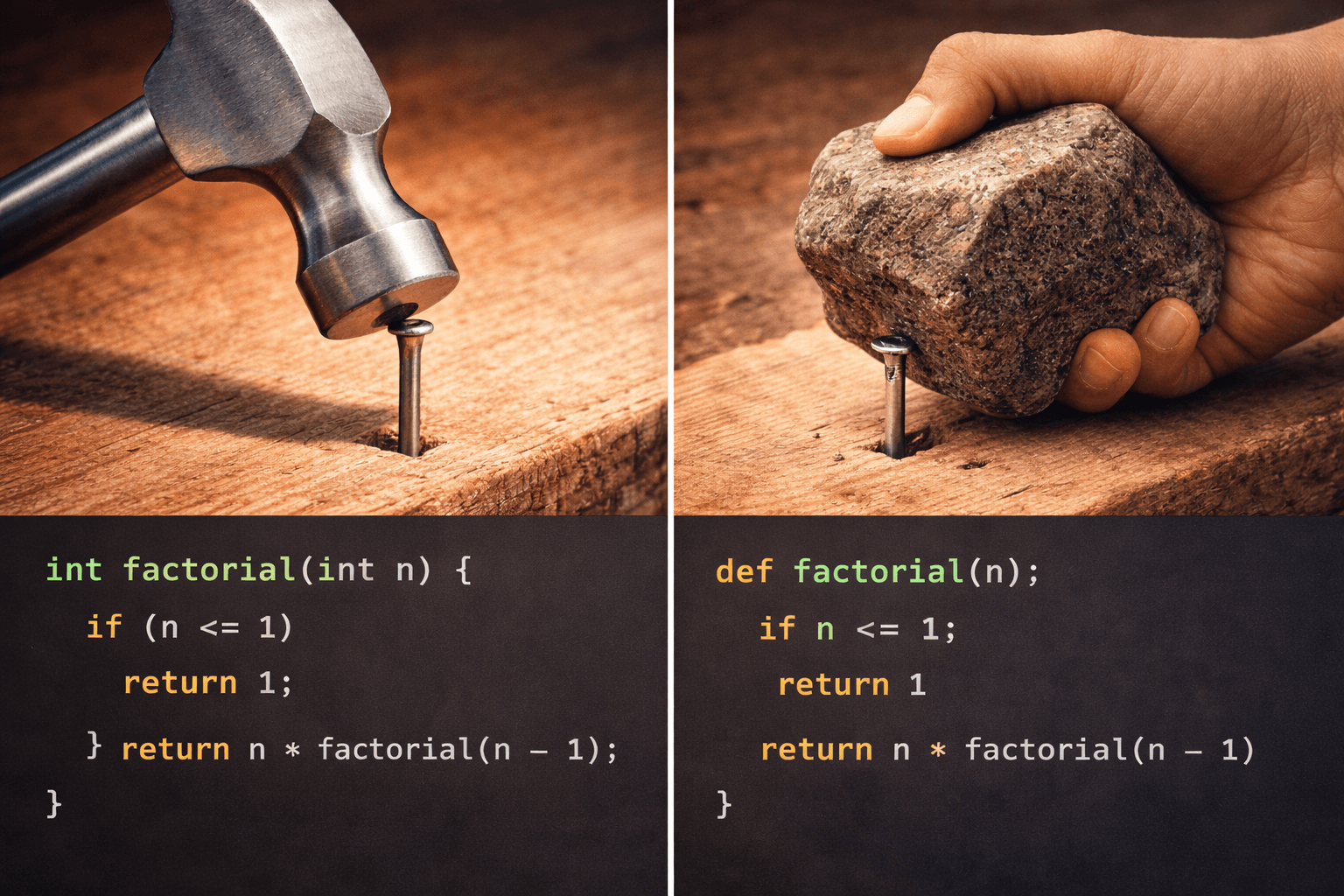
The nail, the hammer, and the stone
Imagine you need someone to drive a nail.
One person has spent years using a hammer to drive nails.
Another person has spent years using a stone to drive nails.
Both can drive the nail.
The hammer and the stone are just tools. The actual skill is understanding force, angle, and impact.
If your job description says, “Must have experience using a hammer,” you automatically eliminate someone who already knows how to do the work — they just used a different tool.
Teaching someone how to use a hammer is easy.
Teaching someone how to understand the task itself is not.
How hiring confuses tools with skills
Most job descriptions are written around tools:
- specific software
- platforms
- programming languages
- systems
Over time, those tools become proxies for capability.
Instead of asking whether someone can do the work, hiring asks whether they’ve used the exact same tools before.
Hiring ends up looking for the hammer — not the ability to drive the nail.
Why transferable skills get filtered out
Hiring filters are designed for familiarity.
Resume screening looks for exact matches. Automated systems remove candidates who don’t check every box. Human reviewers follow the same pattern to save time.
Anything that doesn’t look familiar gets filtered out early.
The result isn’t better hiring. It’s narrower visibility.
How this shows up in real roles
This happens everywhere:
- A developer who’s written software in Ruby or Java gets filtered out of a role asking for C++
- A product manager who’s used Rally gets filtered out of a team using Jira
- An operator who’s run one system is dismissed because the company uses another
Different tools. Same underlying skill.
Learning a new tool is often trivial compared to learning how to think, diagnose, and execute.
Why exact tool matches feel safer
Exact matches feel easier to defend.
- They require less explanation. They reduce internal questioning. They give decision-makers cover if something goes wrong.
But what they reduce is accountability — not risk.
The real risk shows up later, when adaptability matters more than familiarity.
Hiring for a role like this right now? One call is usually enough for us to tell you whether we can fill it.
Book a CallThe cost of ignoring transferable skills
When transferable skills are ignored:
- candidate pools shrink
- hiring cycles lengthen
- teams overpay for perceived scarcity
- capable, adaptable people are missed
The talent didn’t disappear. The filter hid it.
When transferable skills matter most
Transferable skills matter most when:
- systems are still evolving
- roles aren’t fully defined
- tools change
- learning speed matters
The more dynamic the environment, the more dangerous narrow filters become.
Where this leaves hiring decisions
Hiring doesn’t fail because talent isn’t available.
It fails because tools are mistaken for capability.
When hiring searches for tools instead of skill, it misses people who already know how to do the work.
If this sounds familiar
When hiring focuses on exact tools, real capability often disappears behind narrow filters.
I work with teams that want to identify transferable skills early — before they get filtered out.
If you want to talk through where your hiring process may be confusing tools for skill, you can request a private consultation below.
Frequently Asked Questions

What counts as a transferable skill?
Skills related to thinking, problem-solving, execution, and learning — not specific tools.
Does this apply to technical roles?
Yes. Often more than anywhere else.
When are exact tool matches necessary?
In highly constrained or regulated environments with no margin for adaptation.
How hard is it to teach new tools?
Usually much easier than teaching judgment and capability.
Why do hiring teams keep missing this?
Because familiarity feels safer than evaluation.
Hiring right now? Let's talk.
Book a 20-minute call with The Chum Effect. Bring the role you are struggling to fill and we will tell you honestly whether we can help, including when we are not the right fit.
Related articles
Why Trust Is the Only Real Hiring Asset
Interviews, data, and tools can look perfect on paper. This piece explains why trust is what actually holds hiring systems together.
How Much Do Staffing Agencies Charge? A Breakdown for Employers
Direct hire fees, contract markups and conversion fees explained, with the questions that change what you actually pay and the arithmetic for deciding which model is cheaper at your hiring volume.
Warehouse and Light Industrial Staffing Costs
What warehouse, production and light industrial labour actually costs per hour, why workers' compensation drives the markup, and how to control turnover cost.
Best Tech Staffing Agencies in Austin (2026): How to Choose
How to buy technology staffing in Austin: which firms fit volume contract hiring versus senior engineering searches, what Austin's tech labour market does to your timelines, and what to verify first.
Best Staffing Agencies in Austin, TX (2026): An Employer's Guide
How Austin's staffing market is actually structured, which firms fit which hiring problem, and what Austin's specific labour conditions mean for how you should be buying.
The Everyday Thinking Partner Rule
A simple rule for using AI without losing your judgment: let it clarify your thinking, not decide for you. Clearer mind. Same responsibility.


