


Why Resume Matching Breaks Hiring
February 7, 2026 • 3 mins read
Quick Answer
Resume matching fails because it measures exposure and optimization, not real execution, judgment, or performance under constraint.

By Chukwudum “Chumze” Chukwudebelu
Founder/CEO, TheChumEffect Creator of the BAAB Framework

Introduction
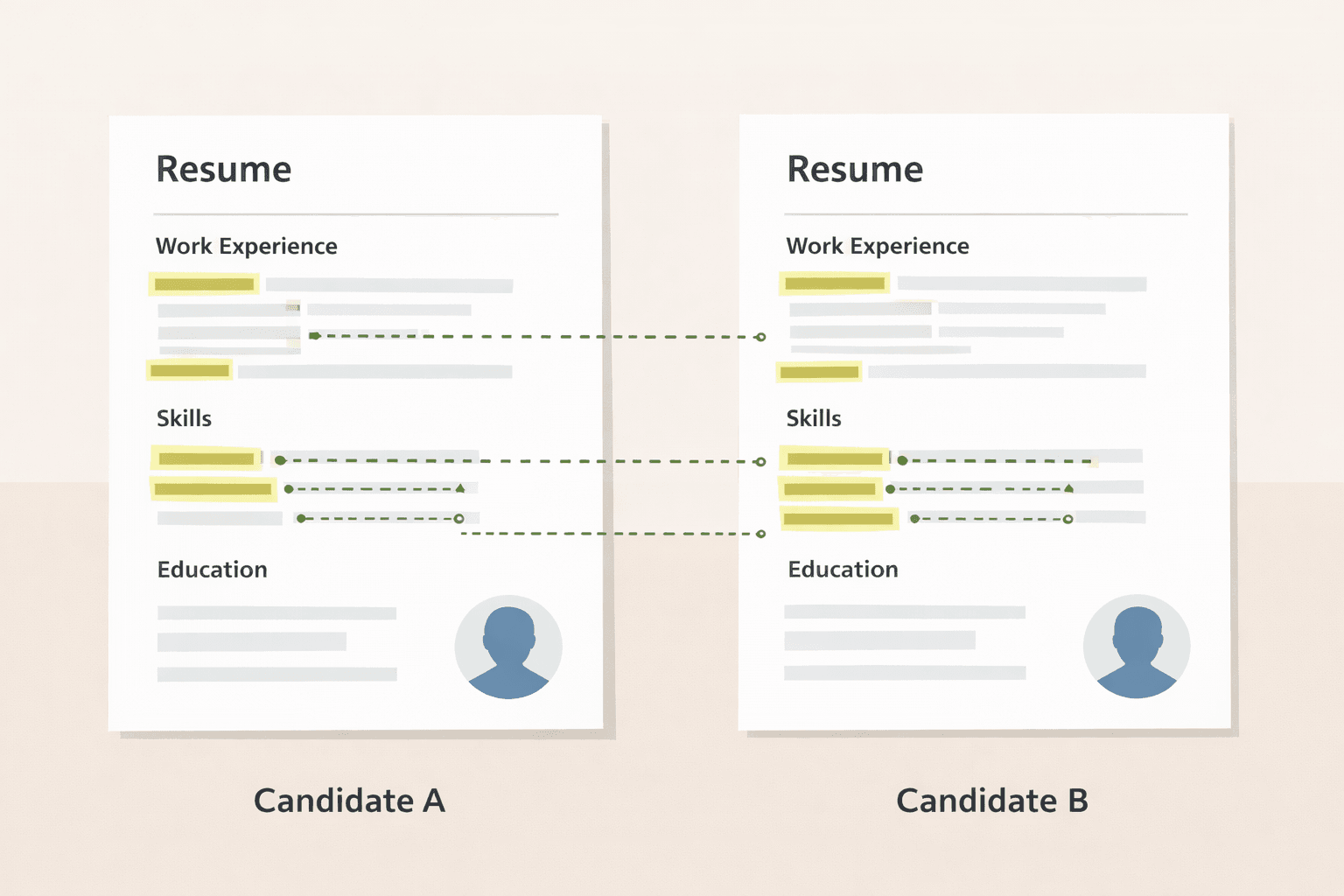
On paper, this looked like a perfect fit.
The resume matched the role.
The tools aligned.
The titles made sense.
And yet, once the work started, the gap showed up almost immediately.
This isn’t a rare outcome. It’s the default.
Why Resume Matching Feels Necessary
Resume matching exists because hiring is usually done under pressure.
There are too many candidates.
Not enough time.
Too much urgency to “narrow the list.”
Resumes become the fastest way to reduce volume and feel like progress is being made.
When decisions feel urgent, matching feels efficient.
The Broken Assumption
Most hiring funnels rely on a quiet assumption:
If a resume matches the role, the candidate can do the job.
But resumes describe exposure, not execution.
They summarize where someone has been — not how they perform, how they think, or how they handle real constraints.
Alignment on paper is not evidence of capability.
Why Resume Matching Feels Reliable (and Why It’s Worse Now)
Resume matching feels reliable because it’s familiar.
Resumes are standardized.
Titles are recognizable.
Company names carry social weight.
Keywords are easy to compare and defend internally.
But that reliability has collapsed.
Today, anyone can use AI to generate a polished, role-matched resume.
Keywords align perfectly.
Language sounds senior.
Formatting looks clean and professional.
This doesn’t mean candidates are dishonest.
It means resumes are now optimized artifacts, not evidence.
When matching becomes easy to manufacture, it stops being predictive.
What Resumes Actually Measure Today
In practice, resumes mostly measure:
- self-reported experience
- storytelling and formatting ability
- keyword familiarity
- optimization skill
They rarely reveal:
- how someone thinks through problem
- show they execute under constraint
- how they adapt when context changes
- how they perform without a script
Resumes describe the past.
Hiring is about predicting future performance.
Hiring for a role like this right now? One call is usually enough for us to tell you whether we can fill it.
Book a CallWhat Predicts Performance Better Than Resume Matching
Better hiring outcomes come from earlier, richer signals.
Things like:
- demonstrated skill
- role-relevant work
- decision-making in contextlearning speedscope handling
This is why, at TCE, resumes are not treated as primary signals.
Instead, we focus on surfacing how people actually think and reason early — before titles, before claims, before payroll.
One way we do this is through AI-recorded interviews paired with live human interviewers.
The AI captures how candidates explain decisions, reason in real time, and respond to constraints.
The human interviewer evaluates judgment, nuance, and context.
The goal isn’t automation for its own sake.
It’s discovering risk earlier — while it’s still cheap.
The Cost of Optimizing for Resume Match
When hiring funnels optimize for resume alignment, the costs show up quietly:
- strong candidates filtered out early
- weak candidates moved forward confidently
- longer hiring cyclesmis-hires with “perfect” resumes
- delayed delivery and rework
Resume matching rarely fails lo
It fails politely — and expensively.
What to Do If This Feels Familiar
If your hiring funnel is optimized around resume match, you’re likely filtering out real capability before you ever see it.
We help teams surface actual ability earlier, especially when volume or time pressure makes resume matching tempting.
If you want to pressure-test a role or understand where resume matching is hurting outcomes, it often starts with a simple conversation.
Frequently Asked Questions

Are resumes useless now?
No. They provide context — not proof.
Does AI mean candidates are lying?
No. It means resumes are optimized artifacts, not reliable signals.
How do you filter without resumes at scale?
By introducing capability signals earlier in the funnel.
Does this apply outside technical roles?
Yes. Any role where execution and judgment matter.
Isn’t this slower?
Slightly upfront. Much faster overall. Resumes describe where someone has been. Hiring is about predicting what they’ll do next. Confusing the two is why resume matching keeps breaking hiring.
Hiring right now? Let's talk.
Book a 20-minute call with The Chum Effect. Bring the role you are struggling to fill and we will tell you honestly whether we can help, including when we are not the right fit.
Related articles
Why Trust Is the Only Real Hiring Asset
Interviews, data, and tools can look perfect on paper. This piece explains why trust is what actually holds hiring systems together.
How Much Do Staffing Agencies Charge? A Breakdown for Employers
Direct hire fees, contract markups and conversion fees explained, with the questions that change what you actually pay and the arithmetic for deciding which model is cheaper at your hiring volume.
Warehouse and Light Industrial Staffing Costs
What warehouse, production and light industrial labour actually costs per hour, why workers' compensation drives the markup, and how to control turnover cost.
Best Tech Staffing Agencies in Austin (2026): How to Choose
How to buy technology staffing in Austin: which firms fit volume contract hiring versus senior engineering searches, what Austin's tech labour market does to your timelines, and what to verify first.
Best Staffing Agencies in Austin, TX (2026): An Employer's Guide
How Austin's staffing market is actually structured, which firms fit which hiring problem, and what Austin's specific labour conditions mean for how you should be buying.
The Everyday Thinking Partner Rule
A simple rule for using AI without losing your judgment: let it clarify your thinking, not decide for you. Clearer mind. Same responsibility.


